

Chrome nails look like liquid metal on day one. By day five, many people see a dull patch on a thumb, a chip at a tip, or a scratch running right through the mirror. It feels like chrome nails are fragile. They are not. Most chrome nails fail early because of two or three small habits, and every one of them is fixable.
This guide shows you how to make chrome nails last longer, from the way you prep your nails to the way you open a soda can. You will learn the sealing steps that stop chrome from wearing off at the edges, the daily habits that protect the shine, and how to remove a set without wrecking your natural nails.
Most of these steps take seconds. The prep and sealing steps add about 10 minutes to your manicure. The rest are habits you pick up over the next 2 to 3 weeks. If you have never done chrome before, start with our full guide on how to do chrome nails at home, then come back here.
- Lint-free pads
- Rubbing alcohol (70% or higher) or nail dehydrator
- Fine nail file (180 grit or higher)
- No-wipe gel top coat
- UV or LED nail lamp
- Broad-spectrum sunscreen, SPF 30 or higher
- Rubber gloves for cleaning
- Cuticle oil
- Acetone, cotton pads and foil for removal
- Dehydrate each nail before the base coat
- Protect your hands with sunscreen before you cure
- Cap the free edge on every gel layer
- Cure every coat for the full time on the bottle
- Add a second coat of no-wipe top coat over the chrome
- Keep your nails out of hot water for the first 24 hours
- Wear rubber gloves for dishes and cleaning
- Use your fingertips, not your nails, as tools
- Massage cuticle oil into your nails twice a day
- File a snag the moment you notice it
- Soak off your chrome nails after 2 to 3 weeks instead of peeling them
Dehydrate each nail before the base coat
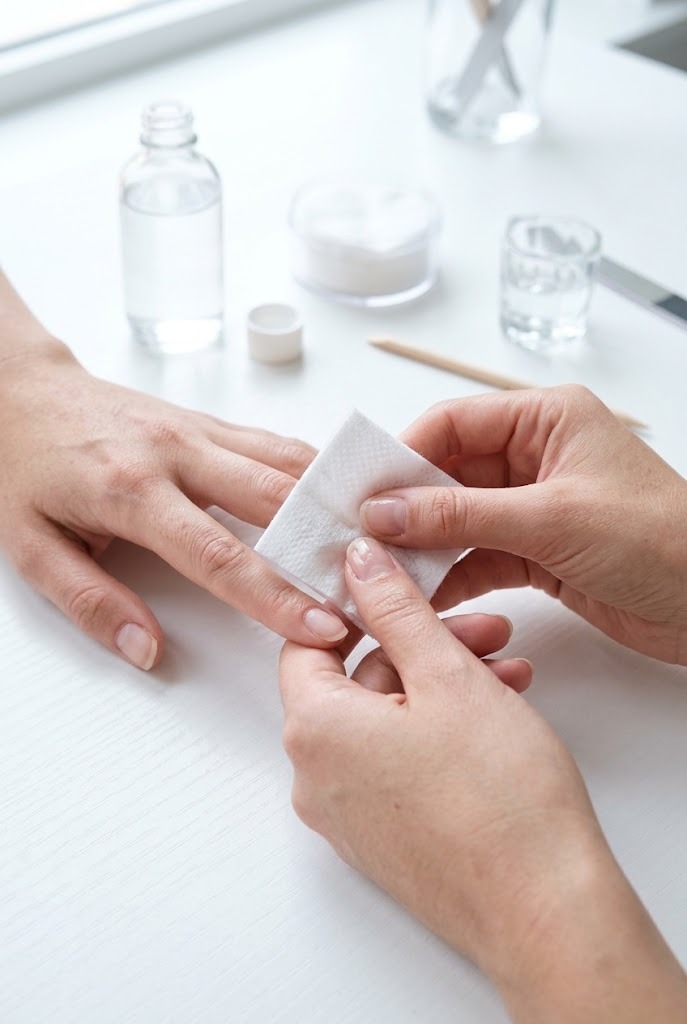
Oil is the enemy of every gel manicure. Even clean nails carry a thin film of natural oil, and gel slides off oily nails within days. Chrome nails lift first at the cuticle, then chip.
Wipe each nail with a lint-free pad soaked in rubbing alcohol, or brush on a nail dehydrator. Let it dry for 30 seconds. The nail should look matte and chalky, not shiny.
Protect your hands with sunscreen before you cure
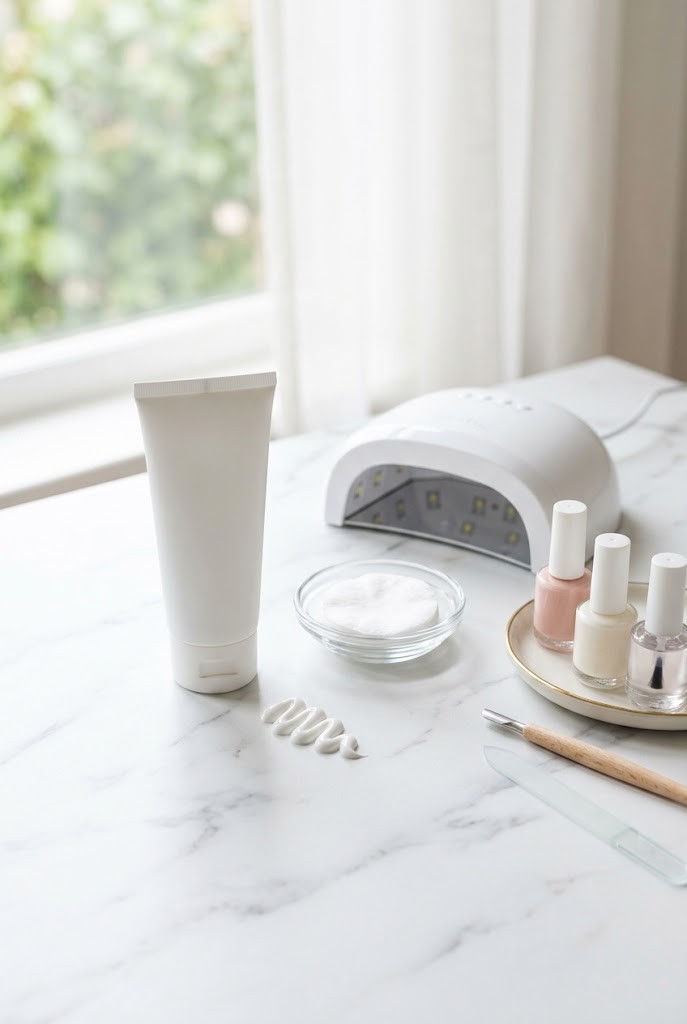
Every gel layer cures under a UV or LED lamp, and a full set of chrome nails means many trips under the light. Dermatologists suggest applying a broad-spectrum, water-resistant sunscreen with SPF 30 or higher to your hands before a gel manicure (American Academy of Dermatology).
Rub it into the backs of your hands and fingers about 15 minutes before you start, then wipe your nails clean with alcohol again. Fingerless gloves with the tips cut off work too.
Cap the free edge on every gel layer
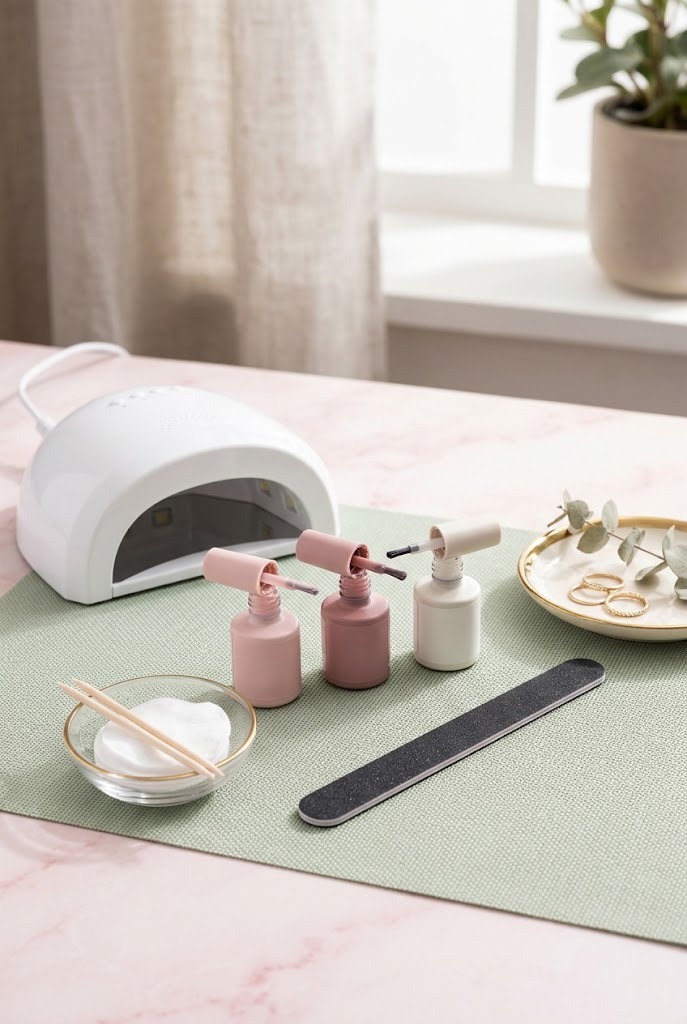
On chrome nails, chips start at the tips. That is where your nails hit keyboards, buttons, and zippers all day.
After you paint each layer, run the brush along the very tip of the nail, as if you are painting the edge of a book. Do this on the base coat, both color coats, and every top coat. Those sealed edges are the main reason one set lasts a week and another lasts three.
Cure every coat for the full time on the bottle
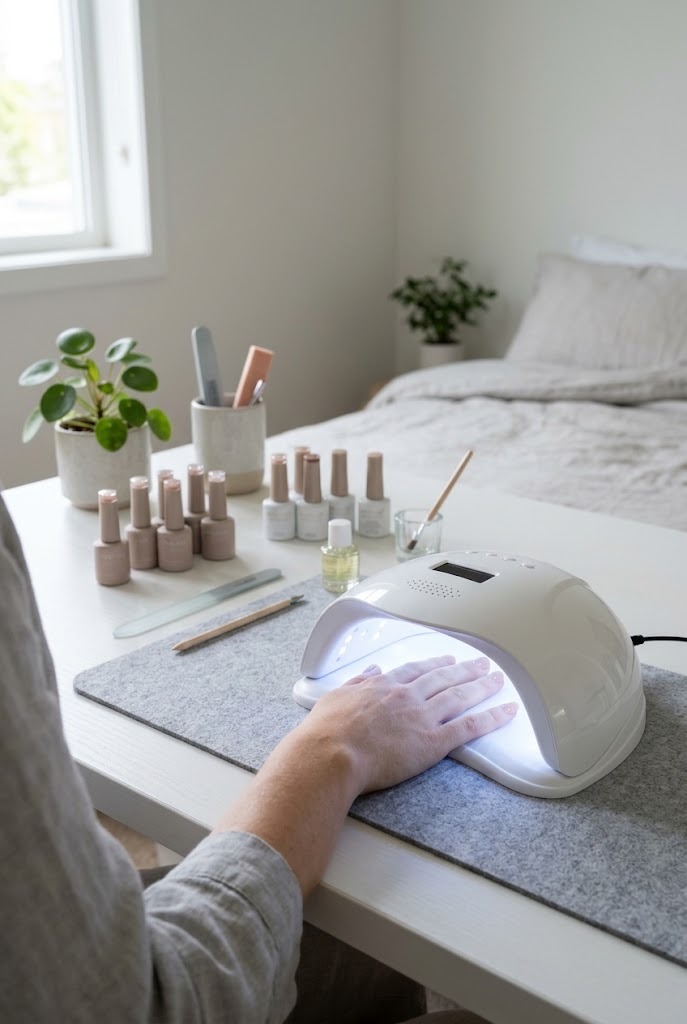
An under-cured layer stays soft underneath. Soft gel peels in sheets, and it takes the chrome with it.
Follow the timing on each bottle, usually 60 seconds under an LED lamp. Cure your thumbs separately, lying flat under the light. In most lamps, thumbs sit at an angle and get less light than your other fingers.
Add a second coat of no-wipe top coat over the chrome
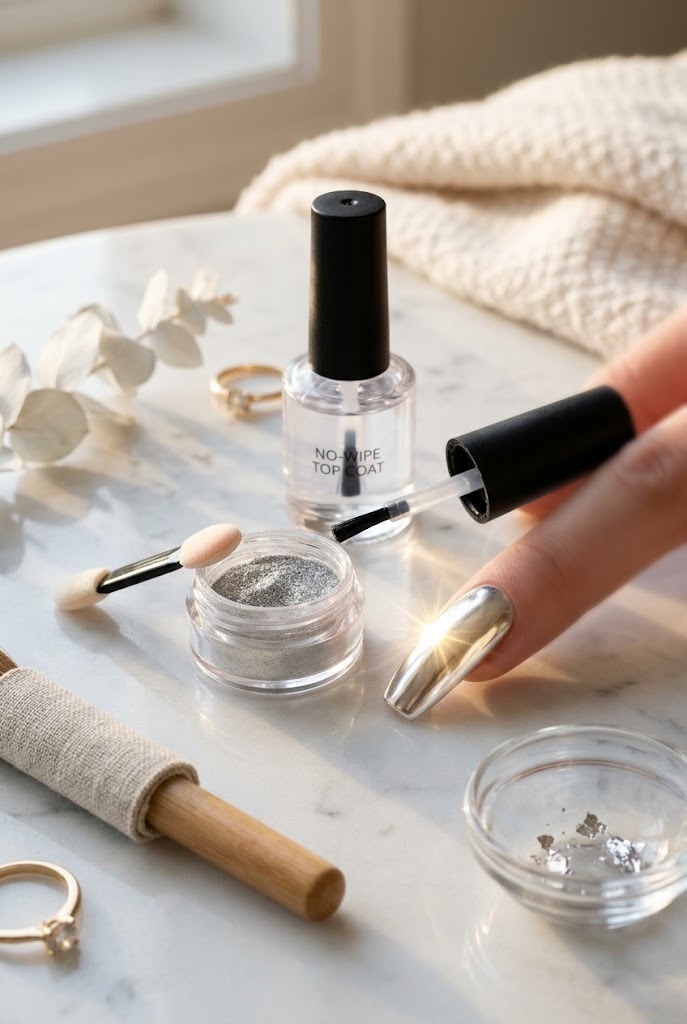
One sealing layer works. Two sealing layers make chrome nails last noticeably longer, because the second coat absorbs scratches that would otherwise reach the chrome.
Paint the first top coat over the chrome powder and cure it. Then add a second thin coat, cap the edges again, and cure for 60–90 seconds. Keep both coats thin. A thick top coat looks cloudy over chrome nails.
Keep your nails out of hot water for the first 24 hours

Gel takes a little time to settle fully on the nail, so many nail techs suggest gentle hands for the first day. Skip long baths, hot tubs, and washing dishes by hand for about 24 hours.
A quick shower is fine. Dry your hands well afterward, including around the edges of each nail.
Wear rubber gloves for dishes and cleaning
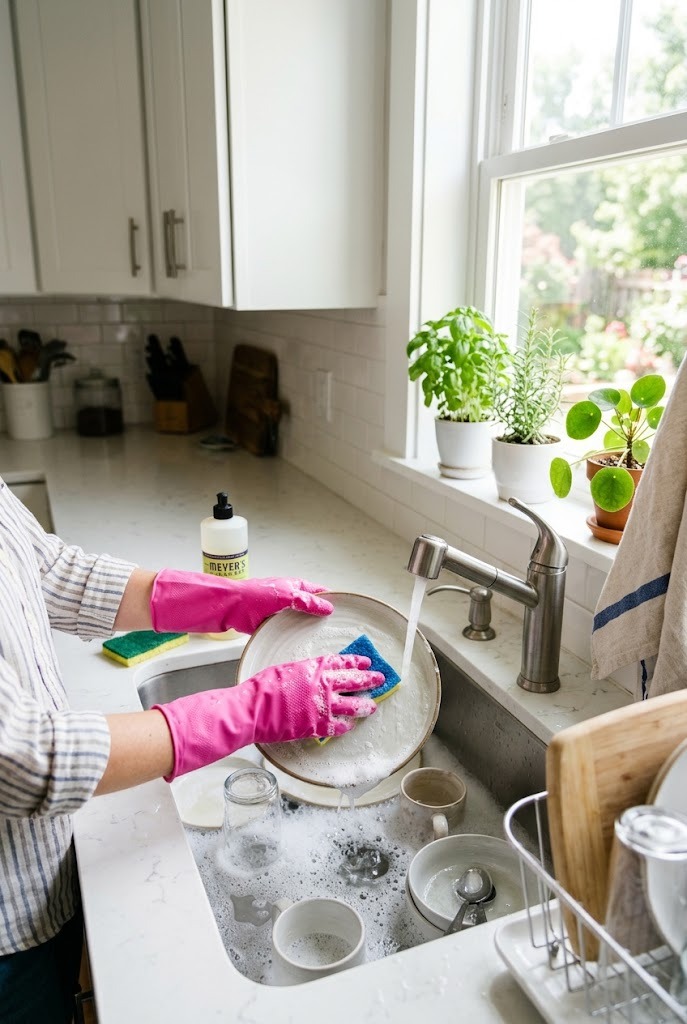
Hot water and cleaning products are the fastest way to dull chrome nails. Water soaks in around the edges, and harsh cleaners break down the top coat.
Keep a pair of rubber gloves next to the sink for your chrome nails, and another next to your cleaning supplies. Pull them on every time. It feels fussy for a week, then it becomes a habit.
Use your fingertips, not your nails, as tools
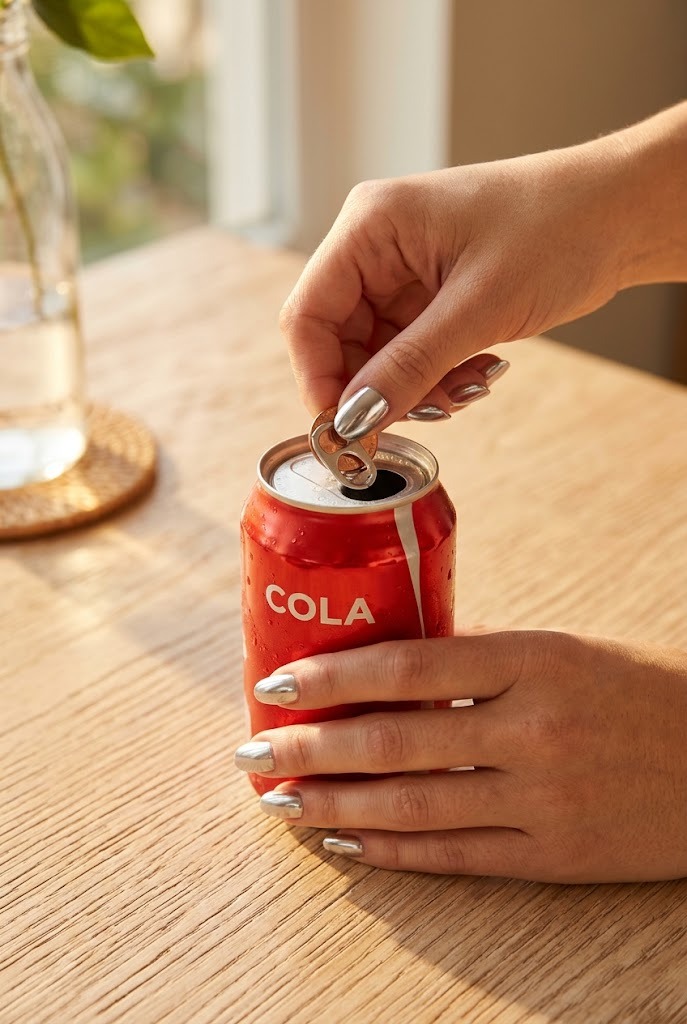
Prying open a can, peeling a sticker, or scraping off a label puts pressure on the free edge of the nail. That is how chips and cracks start.
Use the pad of your finger, a key, or a coin instead. Type with the pads of your fingers, too. Tapping with your nail tips wears the chrome down at the edges.
Massage cuticle oil into your nails twice a day
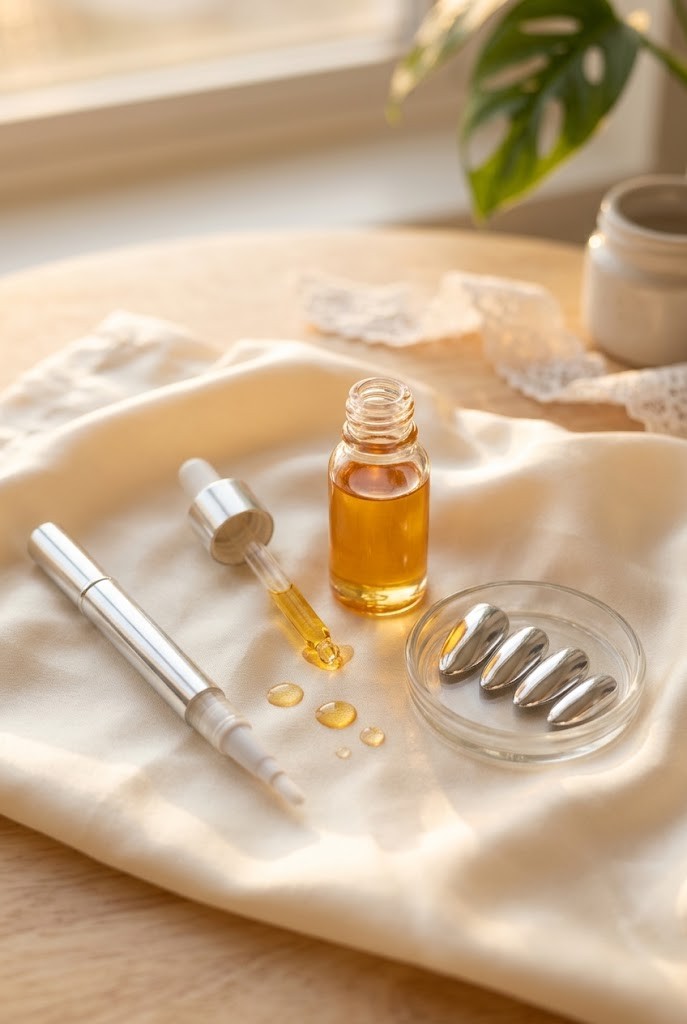
Dry nails bend and crack, and gel cracks with them. Dermatologists recommend moisturizing your nails and cuticles often between manicures, especially if you wear gel (American Academy of Dermatology).
Put 1 drop of cuticle oil on each nail in the morning and before bed. Rub it into the skin around the nail for a few seconds. Oil on top of chrome nails is fine. It wipes off and does not hurt the shine.
File a snag the moment you notice it
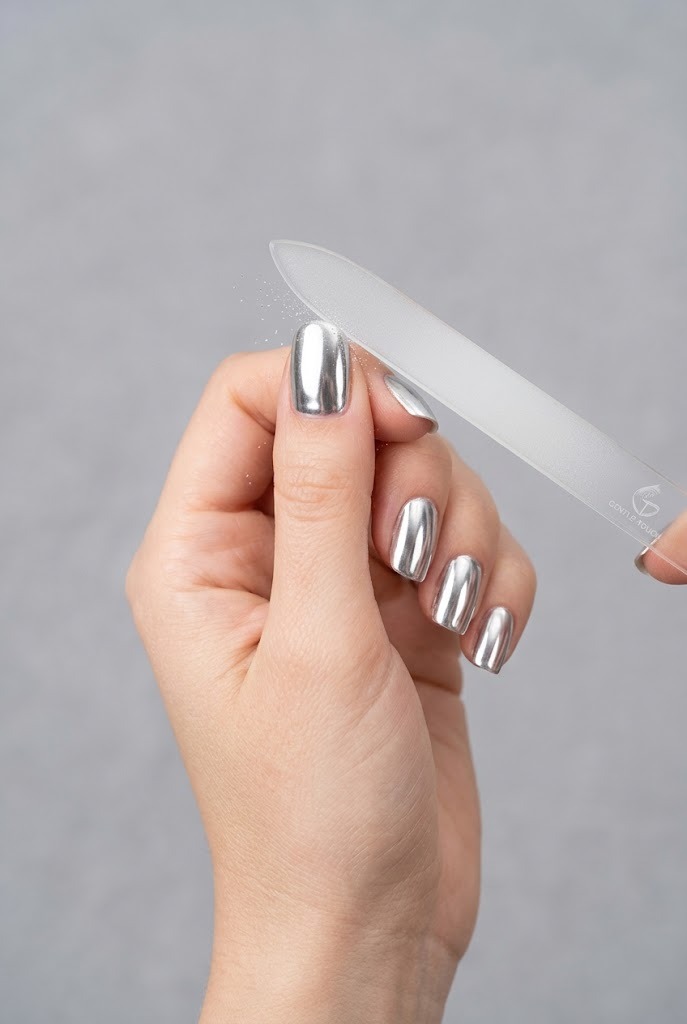
A tiny snag at the tip catches on fabric and hair, and a small snag turns into a big chip within a day. Smooth it right away.
Use a fine file of 180 grit or higher. File gently in one direction, from the side of the nail toward the center. Avoid a back-and-forth sawing motion, which can lift the gel.
Soak off your chrome nails after 2 to 3 weeks instead of peeling them
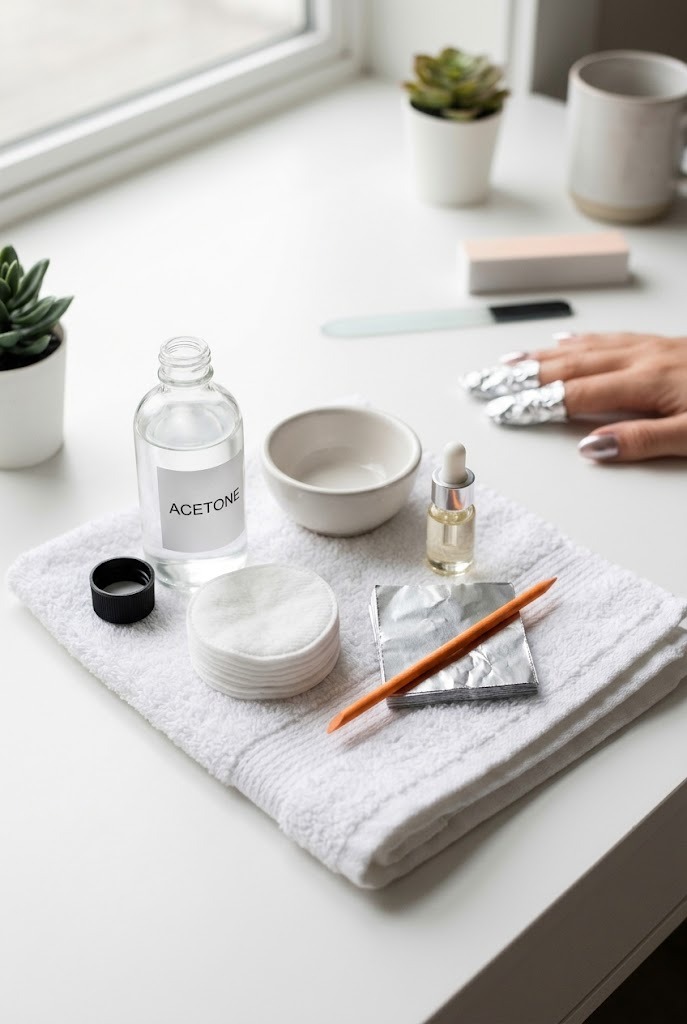
Peeling gel pulls off the top layers of your natural nail, and that leaves your nails thin and weak for the next manicure. Dermatologists warn against picking off gel polish for this reason.
When your nails start to grow out, file the shine off the top coat lightly. Soak a cotton pad in acetone, place it on the nail, and wrap the fingertip in foil for 10–15 minutes. Push off the softened gel gently with an orange wood stick. Keep the acetone on your nails only, and moisturize your hands afterward.
- Lint-free pads
- Rubbing alcohol (70% or higher) or nail dehydrator
- Fine nail file (180 grit or higher)
- No-wipe gel top coat
- UV or LED nail lamp
- Broad-spectrum sunscreen, SPF 30 or higher
- Rubber gloves for cleaning
- Cuticle oil
- Acetone, cotton pads and foil for removal
- Dehydrate each nail before the base coat
- Protect your hands with sunscreen before you cure
- Cap the free edge on every gel layer
- Cure every coat for the full time on the bottle
- Add a second coat of no-wipe top coat over the chrome
- Keep your nails out of hot water for the first 24 hours
- Wear rubber gloves for dishes and cleaning
- Use your fingertips, not your nails, as tools
- Massage cuticle oil into your nails twice a day
- File a snag the moment you notice it
- Soak off your chrome nails after 2 to 3 weeks instead of peeling them
Now you know how to make chrome nails last longer: dry, oil-free prep, sealed edges, two thin top coats, and a few daily habits that protect the shine. Do all of them, and your chrome nails can look fresh for up to 3 weeks. Next time, try a sheer pink base under silver chrome for a softer look. Pin this guide so the checklist is ready for your next set.