

You stand in a fitting room with a pair of jeans that looked great on the model and something about it is off on you. The waist gaps. The legs look short. You try a size up, a size down, and leave with nothing. Most of the time, the problem is not the jeans and it is definitely not your body. It is that the cut was made for a different shape.
This guide shows you how to dress for your body type using a tape measure, a mirror, and about 20 minutes. You will take three measurements, match them to one of five common body types, and learn which necklines, pants, and layers balance your shape. There are no rules about what you are “allowed” to wear. Think of this as a shortcut to finding the cuts that make you feel good faster.
The measuring takes 10 minutes. The mirror checks take another 10. After that, every shopping trip gets easier, because you will know what to pick up first.
- Soft tape measure (sewing type)
- Full-length mirror
- Fitted tank top or leggings
- Notebook or notes app
- Phone camera
- A belt
- One V-neck and one crew-neck top
- Your favorite pair of jeans
- Measure around the fullest part of your bust
- Measure your natural waist
- Measure the widest part of your hips
- Compare your shoulders to your hips in the mirror
- Match your numbers to your body type
- Pick the one area you want to show off
- Choose a neckline that balances your body type
- Pick pants with the right rise and leg shape
- Define your waist with a belt or a front tuck
- Use the rule of thirds to split your outfit
- Check every outfit in a photo, not only the mirror
- Get your favorite pieces tailored to fit
Measure around the fullest part of your bust
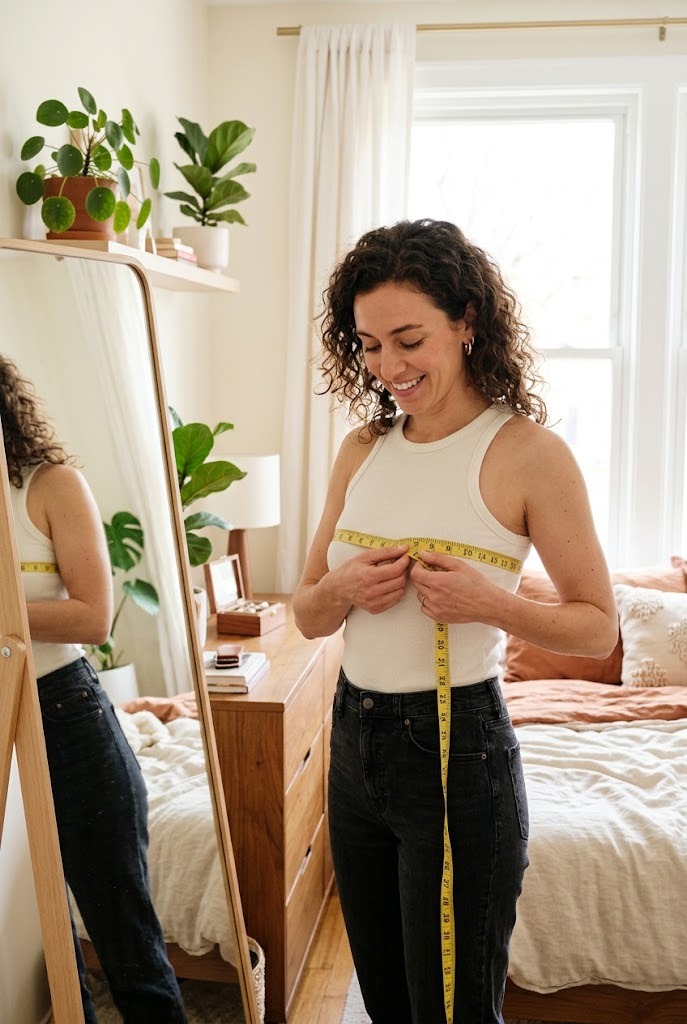
Wear a fitted tank top or a thin bra so the measurement is accurate. Bulky layers can add 1 to 2 inches.
Stand straight with your arms relaxed at your sides. Wrap the soft tape measure around the fullest part of your bust and across your back, keeping it level with the floor (MasterClass). The tape should be snug but not tight. Write the number down.
Measure your natural waist
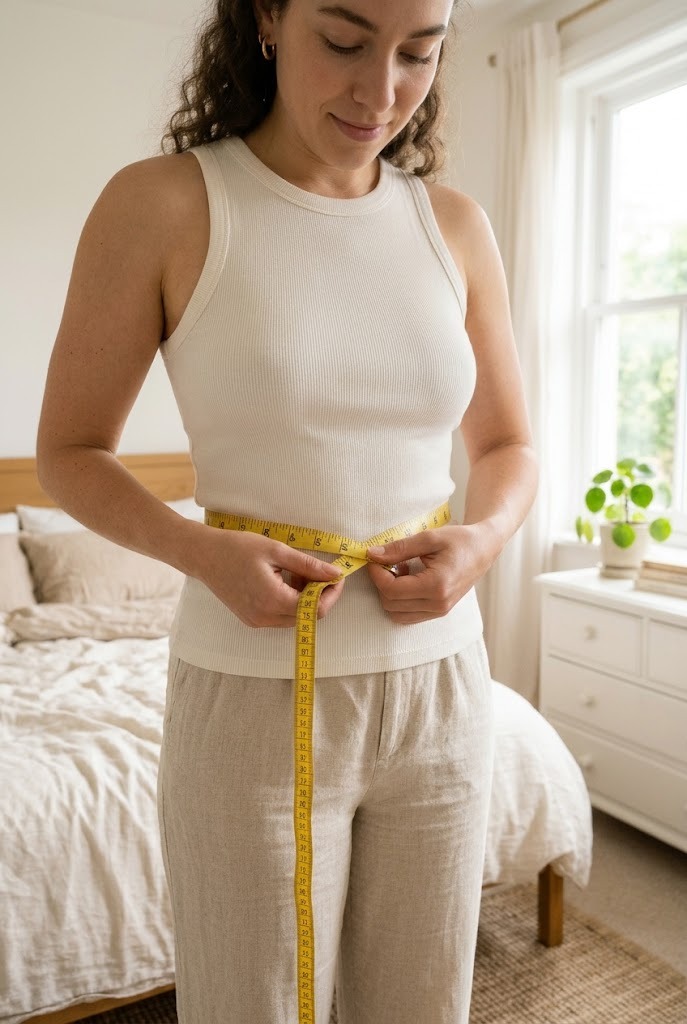
Your natural waist is the narrowest part of your torso, usually a few inches above your belly button and below your ribs. To find it, bend to one side. The crease that forms is your natural waist.
Wrap the tape around that spot. Breathe out normally and do not suck in. A measurement taken while holding your breath leads to clothes that pinch. Write it down.
Measure the widest part of your hips
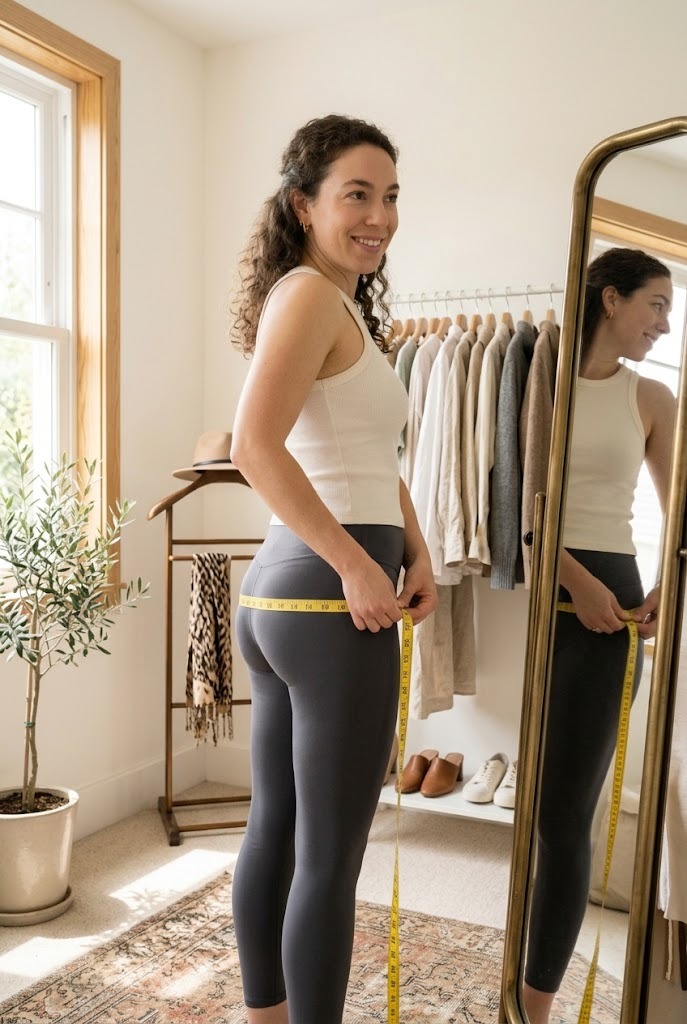
Many people measure at the hip bones, but that is usually too high. The widest point is often lower, around the fullest part of your seat.
Stand with your feet together. Wrap the tape around your hips and seat, keeping it level all the way around. Check it in the mirror from the side to make sure it has not slipped down at the back. Write the number down.
Compare your shoulders to your hips in the mirror
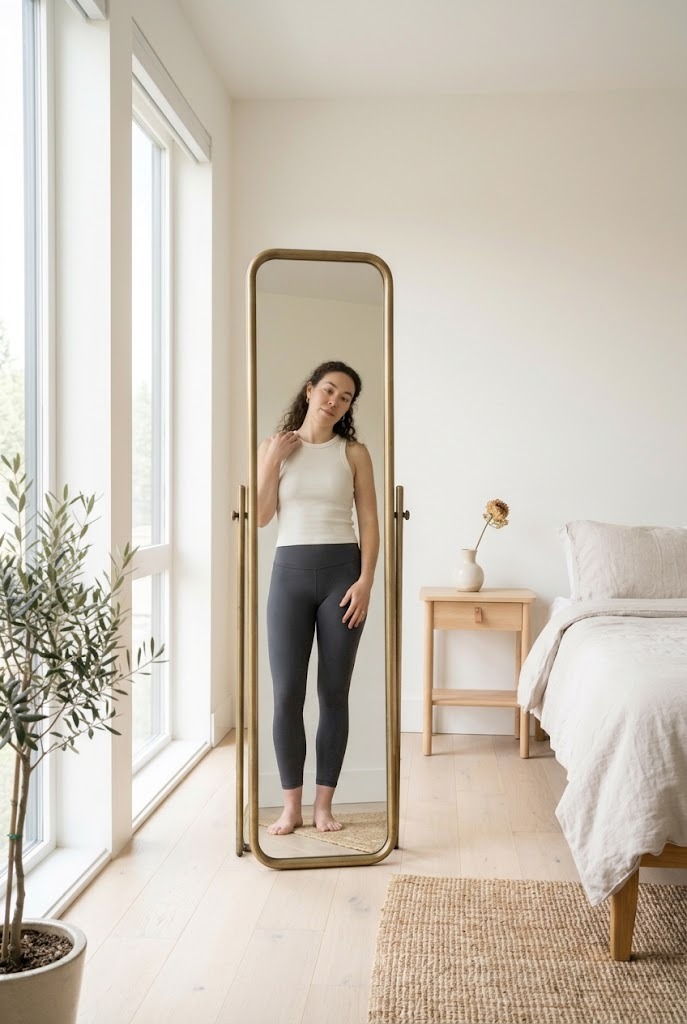
Numbers tell part of the story. Your shoulder line tells the rest, and it is hard to measure on your own.
Stand facing a full-length mirror in your tank top. Look at the outer edge of your shoulders and the outer edge of your hips. Are your shoulders wider, narrower, or about the same? Take a photo so you can check again later with fresh eyes.
Match your numbers to your body type
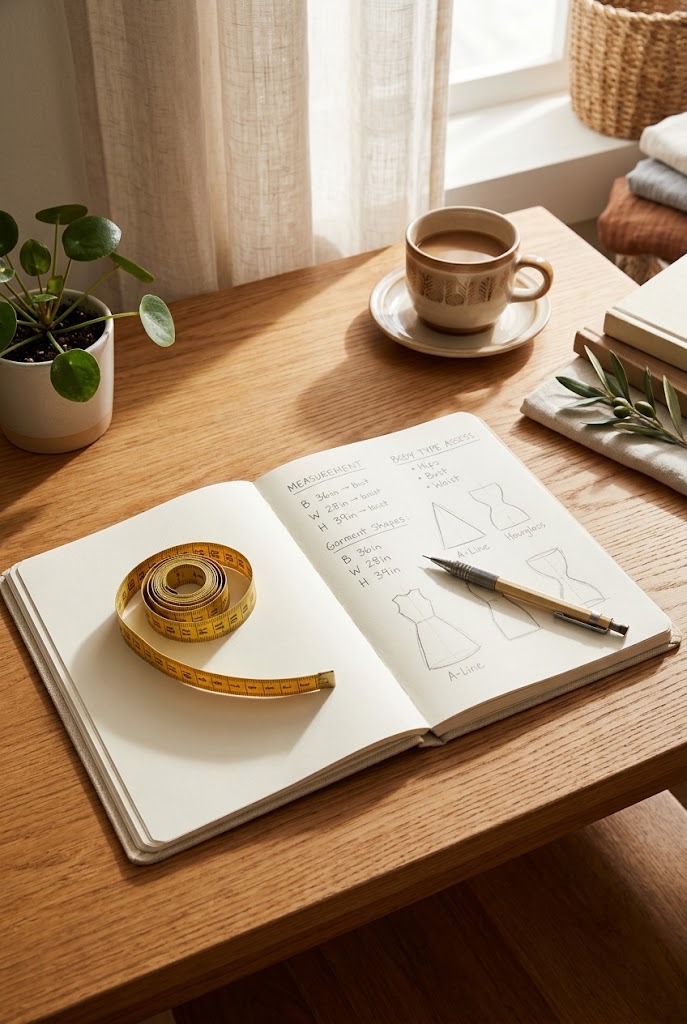
Use your three measurements and the mirror check to find the closest match in the chart below. Most people are a mix of two body types. Pick the one that sounds most like you, and borrow tips from your second. Your body type is a starting point for choosing cuts, not a label.
Pick the one area you want to show off
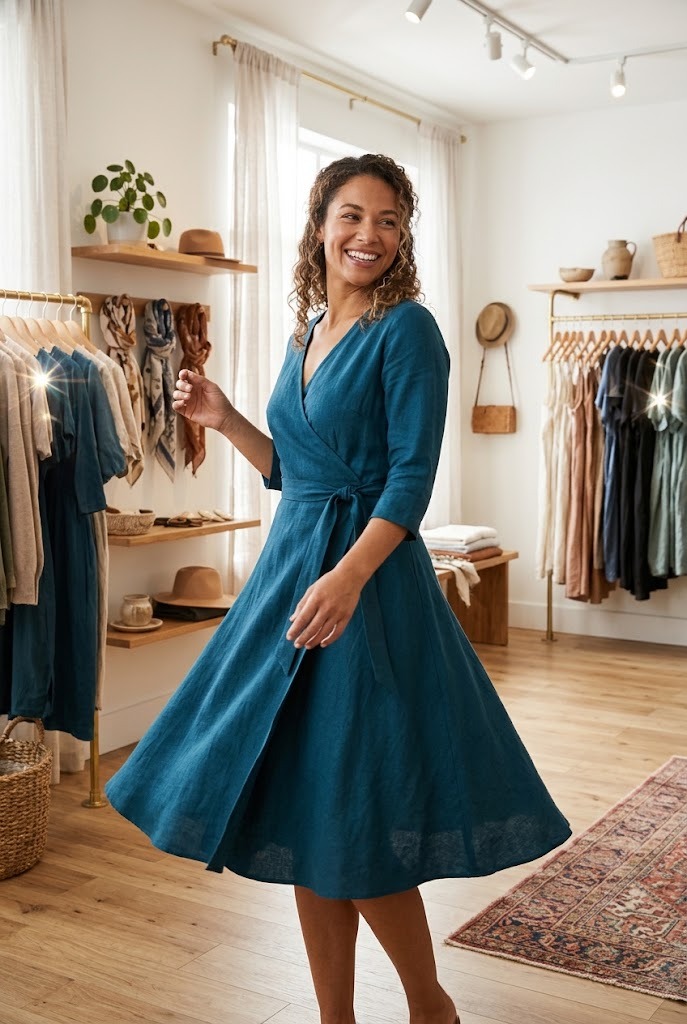
Dressing for your body type is about choosing what to highlight, not hiding. Pick one feature you love, like your waist, your legs, your shoulders, or your collarbones.
Every outfit can draw the eye to that one spot. Bright colors, prints, and details pull attention. Dark, plain colors let an area fade back. Use that to guide each choice from here on.
Choose a neckline that balances your body type
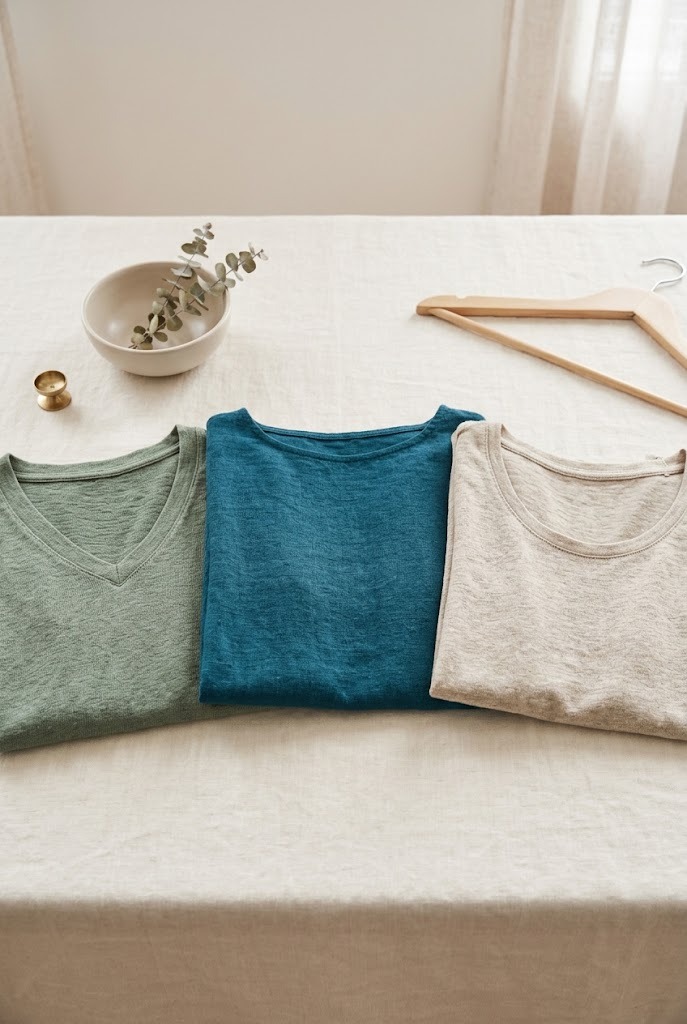
The neckline shapes how wide or narrow your top half looks. Use the one that suits your shape:
- Hourglass: V-necks and wrap tops that follow your curves
- Pear: boat necks, square necks, and off-the-shoulder tops that widen your top half
- Inverted triangle: deep V-necks and scoop necks that narrow the shoulders
- Rectangle: sweetheart and cowl necks that add curves
- Apple: V-necks that draw the eye up and lengthen your torso
Hold a V-neck and a crew-neck in front of you in the mirror to see the difference for yourself.
Pick pants with the right rise and leg shape
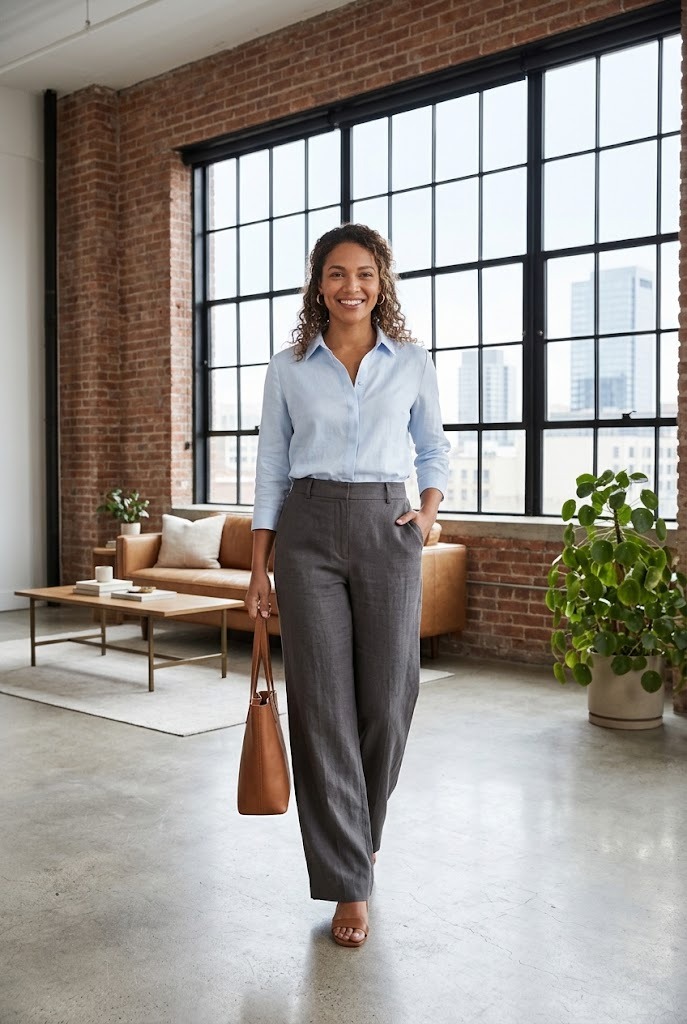
Pants change your proportions more than any other piece. Higher rises make your legs look longer, and wider legs balance wider hips or shoulders.
Pear shapes look balanced in straight or wide-leg pants, dark on the bottom. Inverted triangles look great in wide legs, flares, and bolder colors on the bottom. Rectangles and hourglasses can wear most cuts, and a high rise shows off the waist. Apple shapes look polished in straight legs with a mid rise that sits comfortably.
Define your waist with a belt or a front tuck
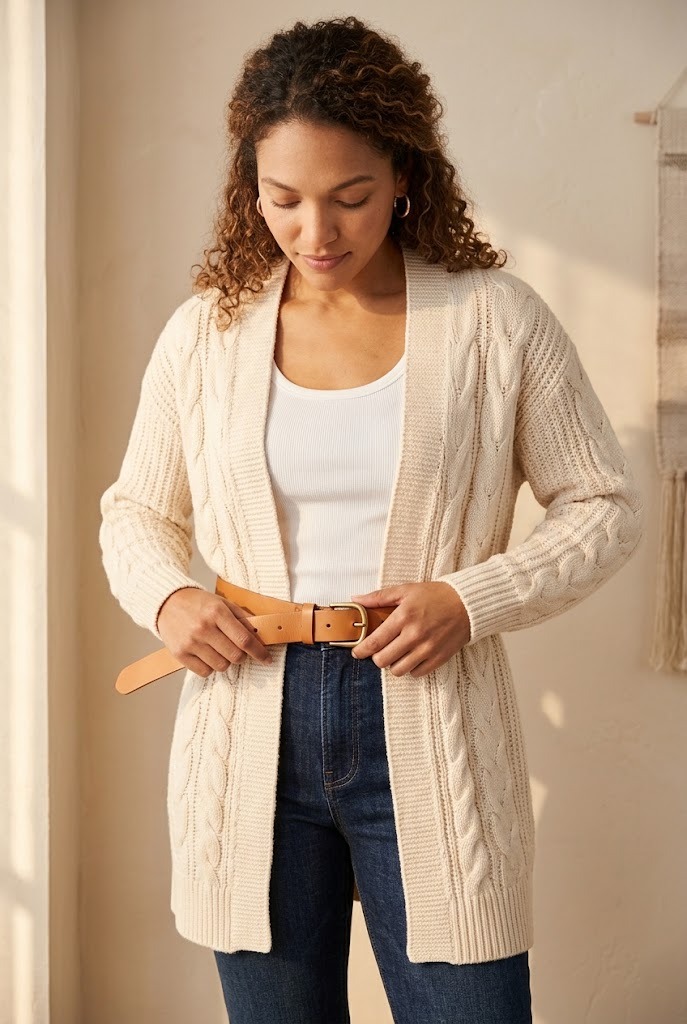
A defined waist gives almost every body type shape, even if your waist is straight. Try a belt over a dress or a long cardigan, at the narrowest part of your torso.
No belt? Tuck only the front of your top into your pants, about 2 inches of fabric. That “French tuck” shows where your waist is without the bulk of a full tuck.
Use the rule of thirds to split your outfit
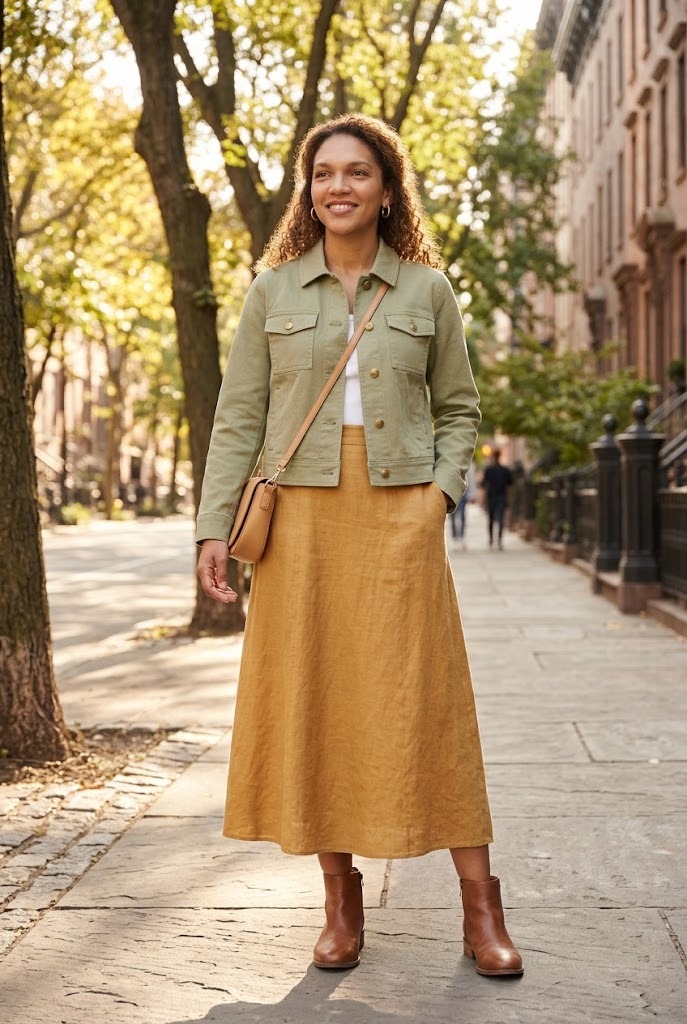
Outfits split into one-third top and two-thirds bottom look balanced to the eye. A half-and-half split, like a long top hitting mid-hip, often makes legs look shorter.
Try it in the mirror. Tuck a top into high-rise pants, or wear a cropped jacket over a long skirt. Then try the same top untucked. You will see the difference right away.
Check every outfit in a photo, not only the mirror
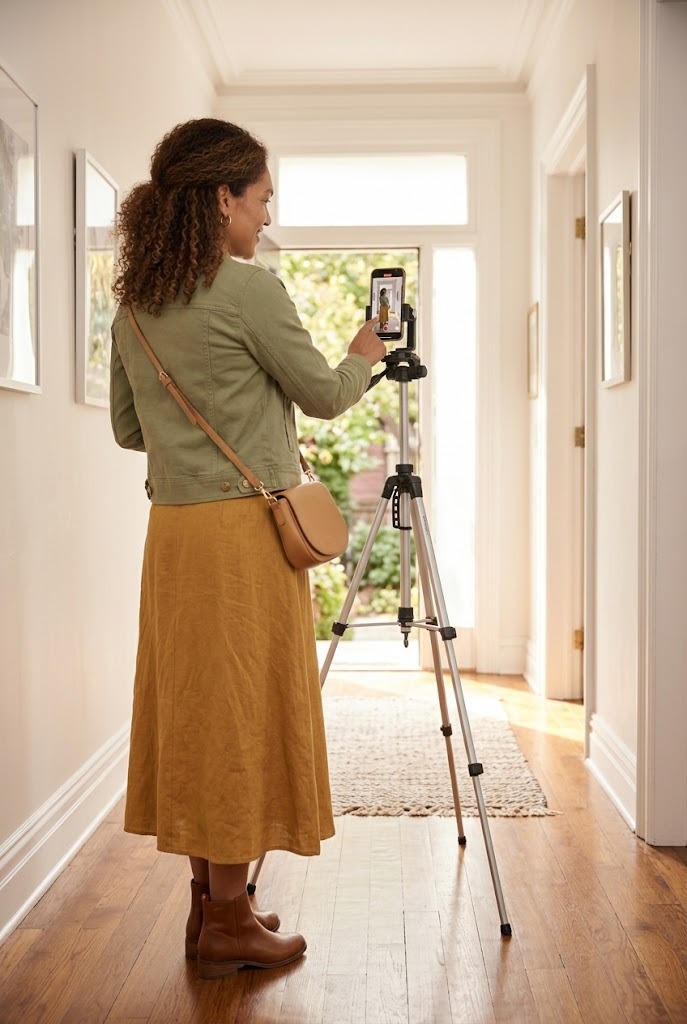
A photo shows what other people see. Mirrors flip your image, and we are used to seeing ourselves in them, so it is harder to judge.
Stand 6 to 8 feet from your phone, or use the timer. Take a full-length photo of the outfit from the front and the side. Compare it with the photo from Step 4. Keep the pieces that look balanced for your body type, and set aside the ones that do not.
Get your favorite pieces tailored to fit
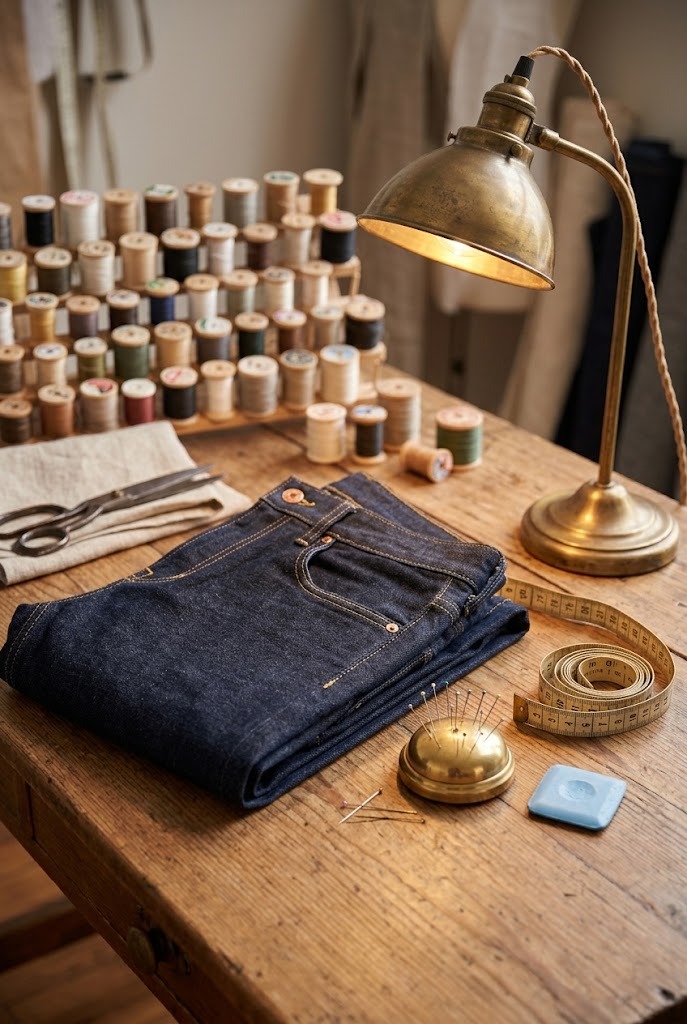
Almost no one fits off-the-rack clothes perfectly. A tailor can take in a gaping waist, shorten sleeves, or hem pants to the right length for your shoes.
Start with the pieces you wear most, like your favorite jeans or a blazer. Basic hemming usually costs a small amount and changes how a piece fits your body type more than buying a new size.
- Soft tape measure (sewing type)
- Full-length mirror
- Fitted tank top or leggings
- Notebook or notes app
- Phone camera
- A belt
- One V-neck and one crew-neck top
- Your favorite pair of jeans
- Measure around the fullest part of your bust
- Measure your natural waist
- Measure the widest part of your hips
- Compare your shoulders to your hips in the mirror
- Match your numbers to your body type
- Pick the one area you want to show off
- Choose a neckline that balances your body type
- Pick pants with the right rise and leg shape
- Define your waist with a belt or a front tuck
- Use the rule of thirds to split your outfit
- Check every outfit in a photo, not only the mirror
- Get your favorite pieces tailored to fit
You now know how to dress for your body type with nothing more than a tape measure and a mirror. Measure once, match your shape, and pick cuts that highlight what you love. Next, use your new favorites to build a small capsule wardrobe that all works together. Save this pin so your body type chart is with you on your next shopping trip.